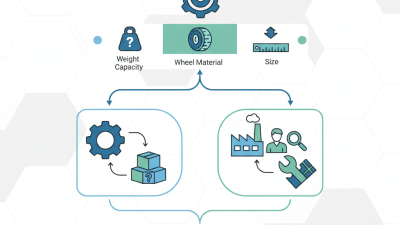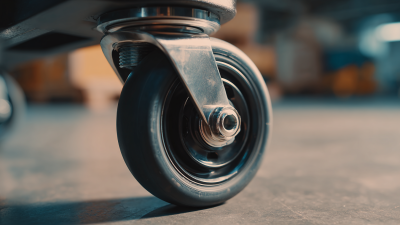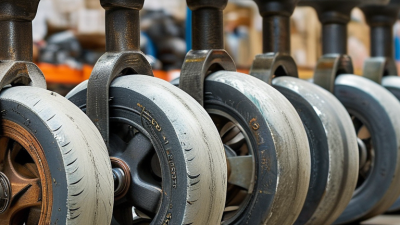
Choosing a China top Heavy Castor Wheels manufacturer supplier requires more than comparing prices. Buyers need verified load ratings, stable materials, accurate dimensions, and dependable communication. A suitable supplier should understand warehouse carts, industrial platforms, medical equipment, and production lines.
Experienced manufacturers usually offer wheels made from polyurethane, nylon, rubber, or forged steel. Each material performs differently on concrete, tile, ramps, and uneven factory floors. A 500-kilogram load rating may change under movement, impact, or poor weight distribution. That detail matters.
Testing should cover swivel performance, braking strength, wheel wear, corrosion resistance, and mounting accuracy. Factory inspections, sample approval, and batch records can reduce purchasing risks. However, no wheel fits every site. That limitation matters. Buyers should share cart weight, operating speed, floor condition, temperature, and daily working hours before selecting Heavy Castor Wheels.
A reliable China supplier should explain these choices clearly, not simply promise the lowest quotation. Engineers may recommend different plate sizes, bearings, tread designs, or brake systems for the same application. Customization can improve performance, but it may also increase lead time and tooling costs. This trade-off deserves honest discussion.
Quality is not proven by appearance alone. It depends on repeatable production, practical testing, traceable materials, and responsive after-sales support. Some specifications may still require adjustment after field trials. That is normal. Careful evaluation helps companies choose Heavy Castor Wheels that move smoothly, protect floors, and remain dependable under demanding industrial conditions.
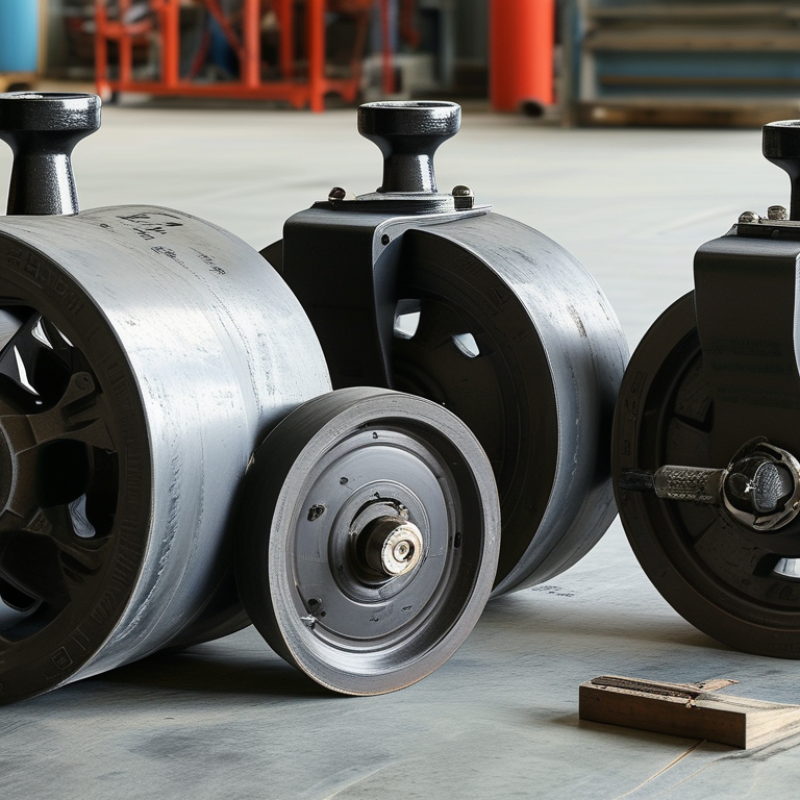
Heavy-duty castor wheels support mobile equipment in factories, warehouses, hospitals, and construction sites. They usually handle loads above standard institutional casters, using reinforced plates, forged brackets, and larger wheel cores. A 2024 Grand View Research market report estimates the global caster market will grow at about 5.6% annually through 2030. This reflects rising demand for safer material movement and flexible production layouts.
Capacity is not the only design factor. Engineers should divide the total equipment weight by three, not four, because uneven floors may leave one wheel unloaded. Add impact forces from ramps, thresholds, and sudden stops. Steel wheels suit smooth concrete and high temperatures, while polyurethane wheels reduce noise and protect finished floors. Wheel diameter also matters. Larger wheels cross debris more easily and require less pushing effort. Real factories are rarely perfect.
Tips: Check the floor, temperature, moisture, and turning frequency before selecting a castor. Review rated capacity under dynamic conditions, not only static loading. Test a sample cart on the actual route. ISO 22883:2004 provides useful guidance for castor performance and testing, but field conditions still deserve practical verification. A small mismatch can create vibration, premature wear, or operator strain.
Heavy-duty castor wheels support equipment that faces repeated loads, uneven floors, and frequent movement. Common types include fixed castors, swivel castors, and swivel castors with total-lock brakes. Fixed models guide carts along straight paths. Swivel models improve turning around narrow corners. Total-lock brakes secure both wheel rotation and swivel movement.
Wheel material directly affects performance. Polyurethane wheels reduce noise and protect finished floors. Nylon wheels resist moisture and many chemicals. Forged steel wheels handle extreme loads, but they can mark concrete and create more vibration. Rubber wheels provide better shock absorption. They may wear faster under abrasive conditions.
Technical selection should begin with the working load, not the wheel diameter alone. Divide the total equipment weight by three, rather than four, because uneven floors may leave one wheel partially unloaded. Add a safety margin for impact loads. A 200-millimeter wheel may carry more weight, but it also raises the equipment height. Check mounting plate size, bolt spacing, swivel offset, bearing type, and brake access.
Temperature ratings matter in cold rooms, ovens, and outdoor storage areas. Sealed precision bearings suit dusty workshops and repeated travel. Plain bearings can be economical for slower movement. In practical testing, small floor joints often reveal weaknesses sooner than static load tests. That detail is easy to miss. Suppliers should provide load data, material specifications, inspection records, and clear installation guidance. Specifications without test conditions need careful review.
The chart compares representative maximum load capacities and common wheel diameters for widely used heavy-duty castor wheel types. Actual performance depends on wheel material, bearing design, floor condition, operating speed, and load distribution.
Heavy-duty castors are not judged by appearance alone. In China, reliable production begins with controlled steel, polyurethane, rubber, and bearing inputs. World Steel Association data reports China produced about 1.005 billion tonnes of crude steel in 2024. That scale supports material availability, but it does not guarantee consistent hardness. Each batch still needs certificates, hardness checks, dimensional records, and traceability. Small errors matter. Records are evidence.
A serious factory maps its process to ISO 9001 principles and uses sampling plans such as ISO 2859-1. Engineers should verify wheel diameter, tread width, bracket thickness, axle torque, and rated load. EN 12527 and EN 12532 provide useful reference points for castor testing and load performance. Static loading is only one check. Rolling resistance, swivel endurance, braking force, and corrosion exposure reveal failures that visual inspection misses.
A practical test can place a loaded castor on a steel track, then record deformation and noise after repeated cycles. Paper is not proof. The exact cycle count should match the application, not a convenient sales claim.
Export quality also depends on calibrated equipment and independent review. Calibration records should show dates, standards, and out-of-tolerance actions. The 2023 World Bank Logistics Performance Index gave China a score of 3.7, reflecting strong logistics capability, yet delivery speed cannot replace inspection discipline.
Buyers should request batch reports, test photographs, and retention samples. I have seen specifications pass on paper while wheel edges failed under uneven loading. That uncomfortable gap deserves investigation. Quality control improves when factories measure failures they would rather hide.
Selecting a reliable heavy castor wheel manufacturer requires more than comparing prices. Start with the load rating, wheel diameter, tread material, and swivel structure. A suitable supplier should explain how each specification fits your equipment and floor conditions.
Ask for test data, material details, and production photographs. Check whether the manufacturer controls casting, machining, assembly, and inspection. Traceable batch records show stronger quality control. Request samples before placing a large order. I have learned that a smooth sample does not always prove long-term durability. Repeated load tests matter. Clear warranty terms and realistic delivery dates also reveal supplier reliability. A polished catalog can still hide weak communication.
Tips: Confirm load capacity with a safety margin. Test wheels on your actual floor. Check brakes, bearings, and corrosion resistance. Ask how defects are handled. Visit the factory, or arrange a live video inspection. Review export experience and technical support, not just the quotation. The cheapest option may create higher replacement costs. Small details matter.
Choosing a top heavy castor wheels manufacturer requires more than comparing catalog prices. A reliable supplier should understand load distribution, floor conditions, operating temperature, and movement frequency. Engineers can customize wheel diameter, tread material, mounting plates, brakes, swivel structures, and corrosion protection. Each change affects performance.
Compliance needs practical evidence. Ask for material details, load test records, dimensional drawings, and inspection reports. The supplier should match documentation with the destination market’s requirements. Safe working loads must reflect real use, not only laboratory results. Small details matter. A loose brake can damage equipment and create costly downtime.
Pricing depends on steel grade, wheel compound, tooling, order volume, packaging, and shipping terms. Request an itemized quotation with samples before approving bulk production. Export support should include commercial invoices, packing lists, product specifications, and suitable shipping coordination. Customs classification also deserves careful review. No quotation is truly final until specifications are confirmed. A supplier may overlook packaging weight or local certification needs. That weakness should be discussed openly and corrected before shipment. Clear communication builds trust better than impressive promises.
| Data Dimension | Specification or Range | Reference / Commercial Relevance |
|---|---|---|
| Product Category | Heavy-duty swivel, fixed, brake, and shock-absorbing castors | Used on material-handling equipment, industrial carts, platforms, warehouse equipment, and mobile machinery |
| Typical Wheel Diameter | 80–400 mm | Larger diameters generally improve obstacle clearance and rolling performance on uneven floors |
| Typical Load Capacity | Approximately 100–5,000 kg per castor, depending on design and test conditions | Capacity should be selected using the actual load, number of wheels, floor condition, speed, and impact factors |
| Common Wheel Materials | Polyurethane, nylon, polypropylene, rubber, forged steel, and cast iron | Material selection affects noise, floor protection, chemical resistance, rolling resistance, and temperature performance |
| Wheel Core and Housing | Steel, stainless steel, cast iron, aluminum, nylon, or reinforced polymer | Housing material and plate thickness are selected according to load, corrosion exposure, and operating environment |
| Bearing Options | Plain bore, roller bearing, ball bearing, or tapered bearing | Bearing choice depends on load, operating speed, shock loading, maintenance requirements, and ambient conditions |
| Mounting Configurations | Top plate, threaded stem, bolt-hole fitting, expanding plug, and welded mounting | Mounting dimensions can be specified by plate size, hole spacing, stem diameter, stem length, and mounting height |
| Brake and Locking Systems | Wheel brake, total-lock brake, directional lock, or no-brake configuration | Total-lock systems typically restrict both wheel rotation and swivel movement |
| Customization Scope | Wheel diameter, tread width, hardness, color, bracket geometry, mounting pattern, bearing, brake, and surface finish | Custom drawings, samples, and approval specifications are normally required before production |
| Wheel Hardness | Common polyurethane options are approximately 75–95 Shore A; rigid materials are specified by material grade | Hardness affects rolling resistance, floor marking, vibration absorption, and load-bearing behavior |
| Temperature Considerations | Operating range varies by wheel material, bearing grease, seal, and housing construction | High-temperature, cold-room, or washdown applications require material-specific validation rather than a generic rating |
| Corrosion-Resistance Options | Zinc-plated steel, stainless steel, powder-coated steel, and corrosion-resistant polymer components | Stainless steel and sealed components are commonly considered for wet, humid, food-processing, and chemical environments |
| Quality and Performance Testing | Load testing, rolling resistance, swivel endurance, brake performance, dimensional inspection, and visual inspection | Testing criteria should be agreed in advance because capacity depends on speed, floor type, impact, and duty cycle |
| Relevant Technical Standards | ISO 22883 and ISO 22884 may be used as references for industrial castor performance and testing | The applicable edition, test method, and acceptance criteria should be confirmed in the purchase specification |
| Material Compliance | REACH Regulation (EC) No 1907/2006 and RoHS Directive 2011/65/EU may be requested where applicable | Compliance documentation depends on the destination market, product construction, and customer declaration requirements |
| Pricing Factors | Wheel material, load rating, diameter, bearing, brake, housing, finish, tooling, order quantity, packaging, and destination | A reliable quotation requires a technical drawing or specification, quantity, delivery term, and destination port |
| Quotation Structure | Sample price, tooling charge if applicable, unit price, packaging cost, freight, and applicable taxes or duties | Incoterms such as EXW, FOB, CIF, or DAP should be stated clearly on the commercial quotation |
| Minimum Order Quantity | Depends on standard or customized construction, tooling requirements, and production scheduling | The MOQ should be confirmed for each model rather than assumed across an entire product range |
| Sample and Approval Process | Drawing review, prototype or sample, dimensional approval, performance confirmation, and pre-production approval | A signed specification helps control repeatability for custom castors and replacement orders |
| Export Packaging | Cartons, pallets, separators, protective wrapping, moisture protection, and customized labels | Packaging should protect brackets, brake mechanisms, wheel treads, and finished surfaces during handling and transit |
| Export Documentation | Commercial invoice, packing list, transport document, certificate of origin when required, and compliance documents when applicable | Required documents vary by destination, customs regime, Incoterms, and importer instructions |
| Lead-Time Planning | Production time varies according to stock status, customization, tooling, quantity, and inspection requirements | The confirmed lead time should begin after specification approval, deposit receipt, and any required tooling confirmation |
| Recommended Buyer Information | Total load, number of castors, duty cycle, travel speed, floor condition, temperature, chemicals, mounting dimensions, and destination | Complete application data supports accurate selection, pricing, testing, and export documentation |