head_newbanner

2026 How to Choose the Best Furniture Castor for Your Needs?

Choosing the right Furniture Castor is crucial for both functionality and aesthetics. According to industry expert Dr. Sarah Lind, “The right castor can transform a piece from ordinary to extraordinary.” Her insights emphasize the importance of selecting a castor that matches your needs and environment.

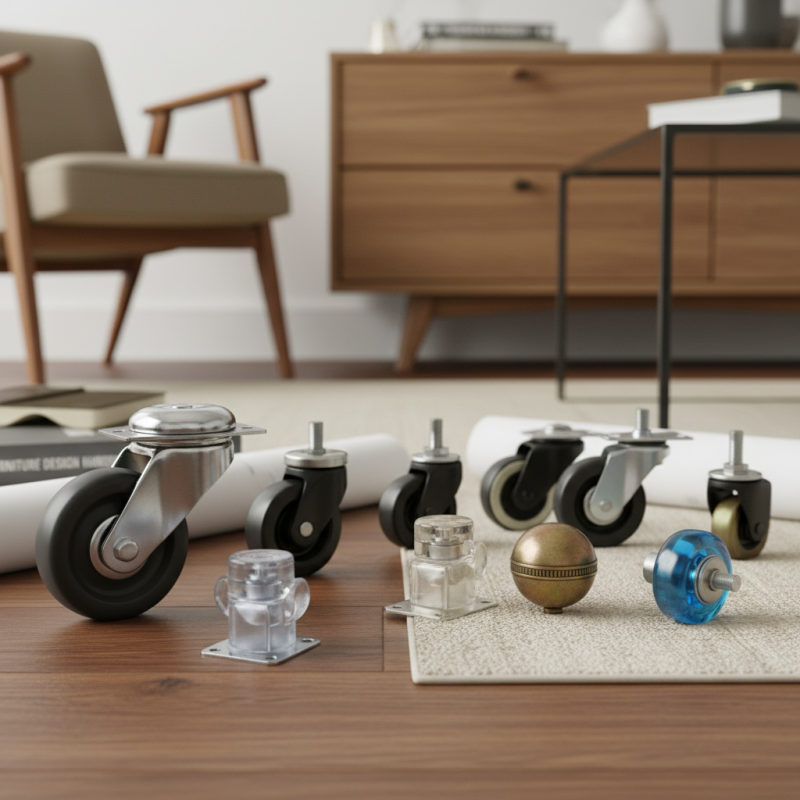
Furniture Castors come in various shapes, sizes, and materials. Understanding these different types helps you make an informed choice. For instance, a hard floor may require a different castor compared to a carpeted area. The wrong choice can lead to damage or inefficiency. Visualize the wheels on a beloved chair. Wouldn’t you want them to glide smoothly?

Many overlook the weight capacity. This factor can impact stability and durability. It's essential to balance style and functionality. Not every castor fits every piece of furniture. Experiment, take your time, and reflect on your space. Each decision contributes to the overall experience.
2026 How to Choose the Best Furniture Castor for Your Needs?

Understanding Furniture Castors: Types and Applications

Furniture castors come in various types, each designed for specific applications. Understanding these options can help you select the right one for your needs. There are hard and soft castors. Hard castors work well on carpeted surfaces, while soft ones glide easily over hard floors. The material affects mobility and scratch resistance.

Consider the weight capacity. Heavy furniture requires robust castors. Choosing the wrong type could lead to accidents or damage. Always check the load rating of the castor you pick. There are also locking mechanisms available. These can be crucial in keeping furniture stationary, especially for chairs used at desks.

While aesthetics are important, function should not be ignored. A visually appealing castor that fails to perform can create frustration. Think about the environment too. A castor that suits your space will make life easier. Reflect on your specific needs before making a decision. There’s no one-size-fits-all solution. Each space has its unique demands.

2026 How to Choose the Best Furniture Castor for Your Needs?

Type of Castor Material Load Capacity Wheel Diameter Applications
Swivel Castor Polyurethane 150 kg 80 mm Office Chairs, Carts
Fixed Castor Rubber 200 kg 100 mm Shelving Units, Industrial Equipment
Locking Castor Nylon 120 kg 75 mm Hospital Beds, Storage Carts
Heavy Duty Castor Metal 300 kg 120 mm Machinery, Cargo Handling
Furniture Castor Plastic 80 kg 60 mm Sofas, Beds

Key Factors in Selecting Furniture Castors: Size, Material, and Load Capacity

Choosing the right furniture castor can greatly impact mobility and overall function. Size, material, and load capacity are key factors. Each of these elements plays a vital role in your decision process.

When it comes to size, consider the furniture's height and weight. A larger castor offers better stability, while a smaller one can provide a sleeker look. Ensure you measure accurately. Small errors can lead to mismatched components.

Material is another important aspect. Rubber castors reduce noise and protect floors. On the other hand, metal castors are more durable but can scratch surfaces. Think about where you will use the furniture—office, home, or outdoor?

Load capacity should match the total weight of the furniture plus any additional load. If you underestimate this, you risk damaging the castors. Too much weight can lead to failure, resulting in inconvenience and potential injury. Reflect on these details carefully as they influence your selection process.

Choosing the Best Furniture Castor: Key Factors

This chart illustrates the key factors to consider when selecting furniture castors. The parameters include Size in mm, Material Type represented categorically, and Load Capacity in kg, showing how these dimensions play a critical role in your furniture's mobility and functionality.

Industry Standards and Ratings for Furniture Castors: What to Look For

When selecting the best furniture castor, it’s important to consider industry standards and ratings. Look for weight capacity ratings. Castors must support the weight of the furniture safely. Many castors are tested for load-bearing capabilities. Ensure these ratings match your needs.

Material matters too. Different materials provide various levels of durability and floor protection. Rubber castors protect delicate floors, while metal ones are known for strength. Investigate the hardness and grip of the wheels. A soft wheel can absorb shock but may not roll smoothly on all surfaces.

Not all castors are meant for every environment. Specialty castors exist for different settings, such as indoors or outdoors. Factors like temperature and humidity can affect performance, especially in industrial settings. Choose appropriately to prevent wear and tear. Regularly assess the performance of your castors. Signs of wear signal the need for replacement.

Comparative Analysis of Wheel Design: Rigid vs. Swivel Castors

2026 How to Choose the Best Furniture Castor for Your Needs?

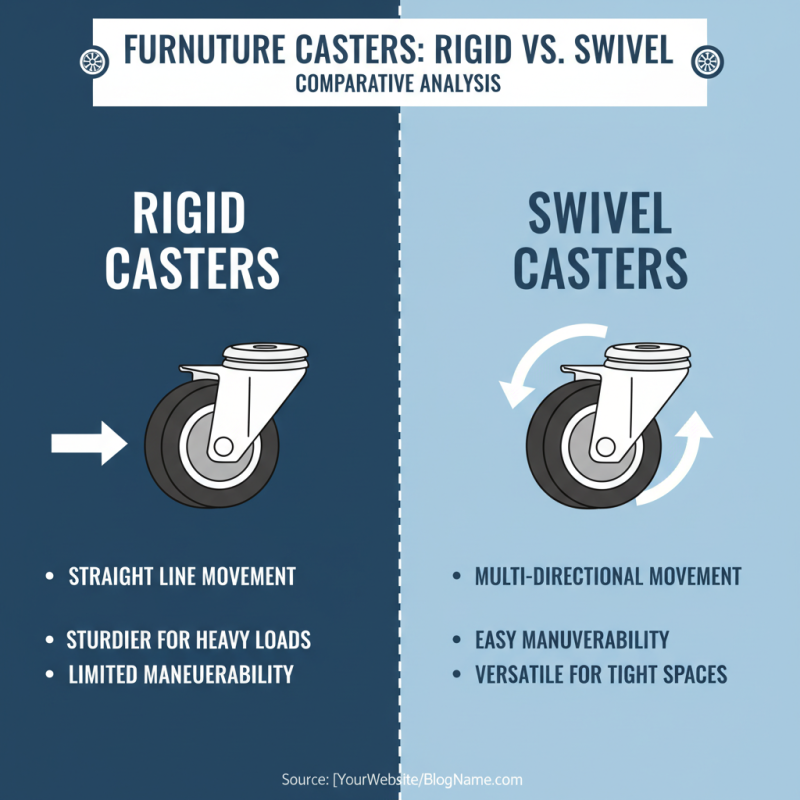
Choosing the right furniture castor can significantly impact mobility and functionality. When deciding between rigid and swivel castors, consider your specific needs. Rigid castors roll forward only, providing straight movement. This design is often sturdier, making it ideal for heavy furniture. However, their limited maneuverability can be a drawback in tight spaces.

Swivel castors, in contrast, allow for multidirectional movement. They can easily navigate corners and obstacles, ideal for dynamic environments. Yet, they may not always offer the same stability as rigid options. In high-traffic areas, this could lead to unwanted rolling. Analyzing how frequently you'll be moving your furniture is crucial.

There is no one-size-fits-all answer. If you have larger, stationary pieces, rigid castors might be your best bet. For versatile, mobile furniture, swivel castors are likely more effective. Understanding your environment and how you'll use the furniture is key to making an informed decision. Consider experimenting with both types before committing. This trial and error can help refine your choice based on real-world feedback.

Maintenance and Care Tips for Prolonging the Life of Furniture Castors

2026 How to Choose the Best Furniture Castor for Your Needs?

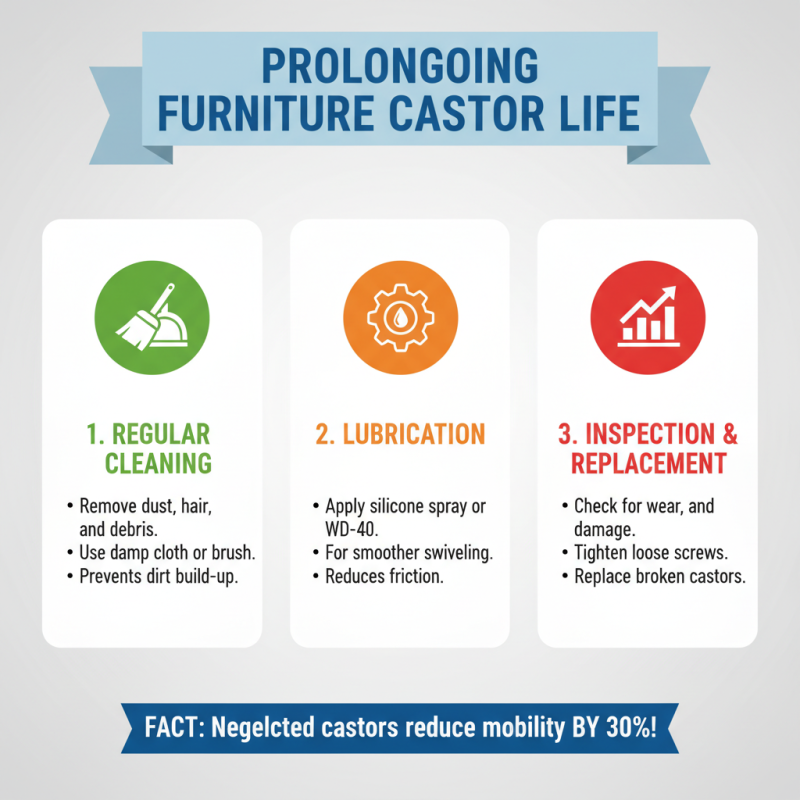
Maintaining furniture castors is crucial for their durability. Regular cleaning can prevent dirt build-up, which impacts their performance. According to industry reports, neglected castors can reduce furniture mobility by up to 30%. This is significant for both office and home environments where ease of movement is essential.

Lubrication is another vital step in maintenance. Using a light machine oil can keep the wheels turning smoothly. A study from the Furniture Industry Association suggests that proper lubrication can extend a castor's life by nearly 40%. Neglecting this can lead to wear and tear, causing costly replacements.

Inspecting for damage is also key. Look for cracks or worn areas that could affect stability. If issues arise, it's often better to replace the castors rather than risk accidents. This approach can save money in the long run, even if initial repairs seem inconvenient. By incorporating these practices, users can significantly enhance the lifespan of their furniture castors.