How to Choose the Best Swivel Plate Caster for Your Needs?
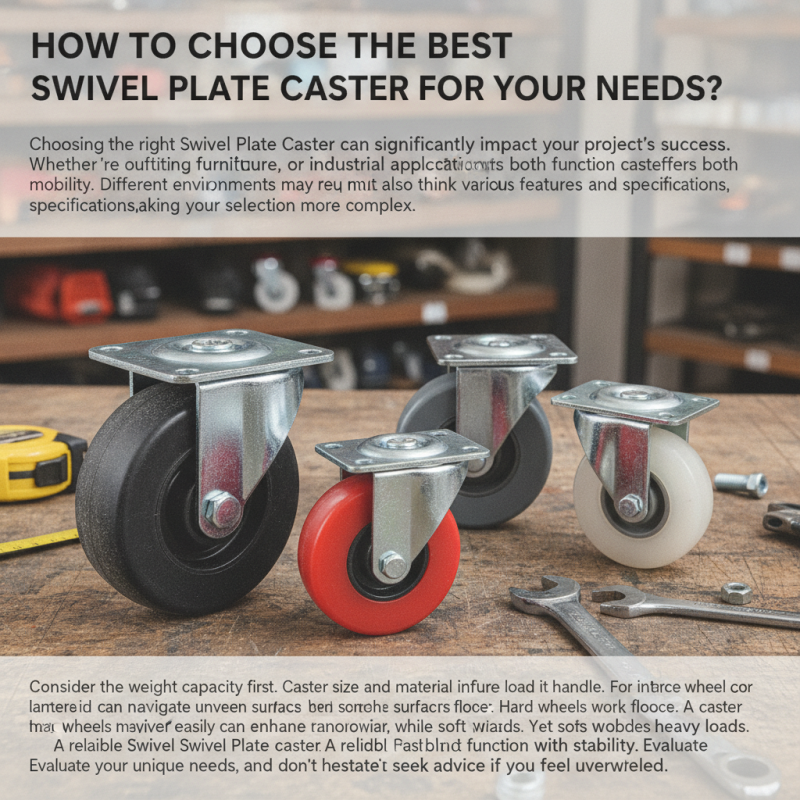
Choosing the right Swivel Plate Caster can significantly impact your project’s success. Whether you're outfitting furniture, equipment, or industrial applications, the right caster offers both function and mobility. Different environments may require various features and specifications, making your selection more complex.
Consider the weight capacity first. Caster size and material influence the load it can handle. For instance, a larger wheel can navigate uneven surfaces better. However, you must also think about the wheel's surface. Hard wheels may work well on smooth floors, while soft wheels are better on carpets.
Mobility is critical but not the only concern. A caster that swivels easily can enhance maneuverability. Yet, it may also wobble under heavy loads. A reliable Swivel Plate Caster blends function with stability. Evaluate your unique needs, and don’t hesitate to seek advice if you feel overwhelmed.
Understanding Swivel Plate Casters: Types and Features
Swivel plate casters are versatile tools for mobility. They come in various types and features, allowing users to choose the right one for their specific needs. The core types include light-duty, medium-duty, and heavy-duty casters. Each type serves different purposes, depending on the weight requirements and the environment. For instance, light-duty casters are ideal for office chairs, while heavy-duty options suit industrial carts.
When selecting a swivel plate caster, consider key features. Wheel material affects performance. Rubber wheels are quiet and ideal for indoor use. Polyurethane wheels can handle rough surfaces better. The swivel action enhances maneuverability but may not suit every environment. In some cases, a fixed caster might be more effective for straight-line movement. Understanding your specific application is crucial. It's important to reflect on whether your current choices meet your satisfaction.
Assessing load capacity is another essential step. Overloading a caster can lead to premature failure. Regular inspection can prevent mishaps, highlighting the need for ongoing evaluation of your equipment. Remember, features like brake systems add safety but can complicate choices. No solution is perfect; each option has trade-offs that should be cautiously weighed. Ignoring these aspects could cause frustration down the line.
How to Choose the Best Swivel Plate Caster for Your Needs?
| Caster Type |
Wheel Material |
Weight Capacity (lbs) |
Wheel Diameter (inches) |
Brake Type |
Price Range ($) |
| Standard Swivel Caster |
Rubber |
200 |
4 |
Total Lock |
20 - 35 |
| Heavy-Duty Swivel Caster |
Polyurethane |
600 |
8 |
Single Brake |
40 - 60 |
| Industrial Swivel Caster |
Plastic |
500 |
6 |
Dual Lock |
30 - 50 |
| Furniture Swivel Caster |
Nylon |
150 |
3 |
No Brake |
10 - 25 |
Assessing Load Capacity for Your Swivel Plate Caster Needs
When selecting a swivel plate caster, assessing load capacity is critical. The load capacity dictates how much weight the caster can safely support. Most industrial casters are rated between 200 to 1,200 pounds per wheel. Understanding the proper load capacity helps avoid accidents and damage.
Evaluating your specific needs requires a few considerations. Calculate the total weight of the items to be moved. Then, consider the environment. For instance, a caster on concrete may have different wear patterns compared to one on carpet. Reports indicate that casters on rough surfaces experience a 20% decrease in load capacity over time.
Another point to consider is the caster's design. Some designs are better suited for specific applications, while others may offer versatility. It's important to understand that exceeding the load capacity can lead to failure. Regular wear and tear can also affect performance. Taking these factors into account will guide you in choosing the right caster for your needs.
Choosing the Right Wheel Material for Optimal Performance
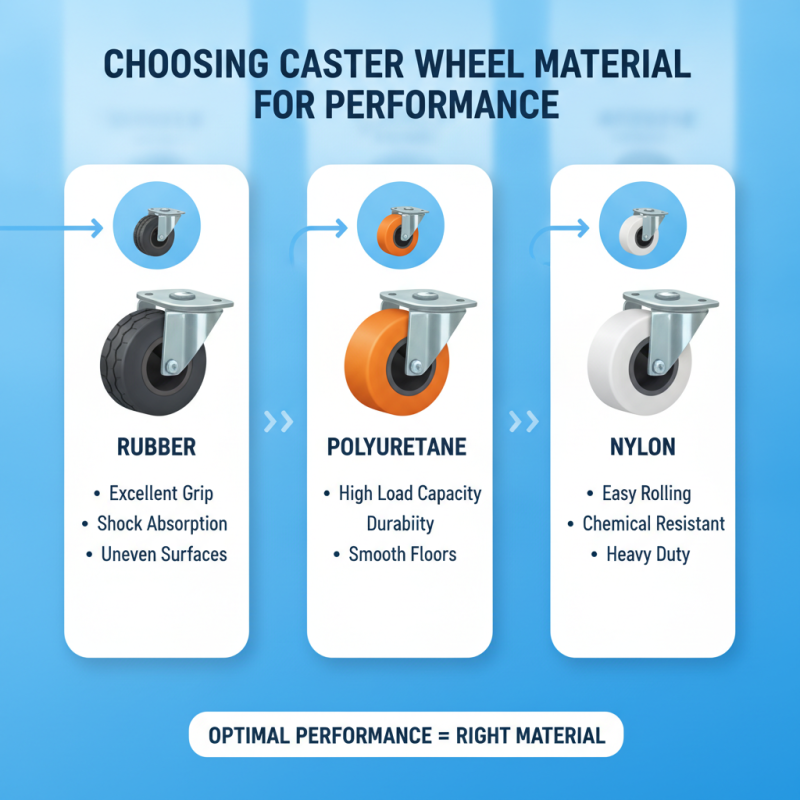
Choosing the right wheel material for swivel plate casters is crucial for performance. It greatly affects how well a caster rolls, turns, and supports weight. Common materials include rubber, polyurethane, and nylon. Each has its own strengths. For instance, rubber provides excellent grip and shock absorption. It's ideal for uneven surfaces.
Polyurethane is versatile. It offers durability while being gentle on floors. This makes it suitable for both indoor and outdoor use. Nylon, on the other hand, is known for its chemical resistance. However, it may not provide the best traction. It can be slippery on polished surfaces.
It's essential to assess the environment. Heavy loads or frequent movement can wear down certain materials faster. Reflecting on your specific needs can guide your choice. Balance performance with the surface you'll be using. Each material has pros and cons, leading to many decisions. Ultimately, understanding these details can make a significant difference in efficiency.
Evaluating Mounting Types and Installation Options
When selecting a swivel plate caster, it's essential to evaluate different mounting types. The most common options are plate mount and stem mount. Plate mounts provide stability and are ideal for heavy loads, while stem mounts offer versatility for various applications. Consider the surface material and desired height when deciding on the mounting type.
Tips: Always measure the area where the caster will be used. This ensures you choose the right size and mounting type. Do not overlook the weight capacity; using a caster beyond its limit can lead to premature wear or failure.
Installation options also play a significant role in the selection process. Some casters require simple bolt-on installation, while others may need specialized tools. Think about your skill level and available equipment. If unsure, consult a professional. Installing incorrectly can cause functionality issues later.
Tips: Read the manufacturer's instructions carefully. Take your time to align the holes properly. A hasty installation can lead to costly mistakes.
Swivel Plate Caster Types and Their Usage
Comparing Cost and Quality for the Best Value in Casters
When it comes to swivel plate casters, cost and quality play crucial roles in making the right choice. Casters vary in price based on materials and design. For instance, a heavy-duty caster made from durable steel often costs more than a plastic one. However, investing in a high-quality caster may save you money in the long run. Cheaper options might offer immediate savings but could fail under stress, leading to replacements.
Quality influences performance and longevity. But what defines a quality caster? Consider the wheel material, bearing type, and load capacity. Polyurethane wheels provide floor protection and smoother operation, while steel can handle heavier loads. Inspect performance ratings carefully. A lesser-known brand may offer great specs at a lower price, but can you trust its durability?
Research is vital. Check for user reviews and expert opinions. Seek recommendations from trusted sources. The best value combines affordability with reliability. Watch for hidden costs in maintenance or replacement. Sometimes spending more upfront leads to better outcomes. Balance your budget with the ideal features. Reflect on your needs and choose wisely.