How to Choose the Best Iron Castor Wheels for Your Needs?
Choosing the right Iron Castor Wheels can significantly impact your projects. Renowned expert John Smith, a pioneer in the materials handling industry, states, "The right wheels can make or break your mobility solutions." This sentiment captures the essence of selecting suitable wheels for your needs.
Iron Castor Wheels offer durability and strength, essential for heavy loads. Understanding load capacity, wheel diameter, and surface material is crucial. Each factor plays a role in performance and longevity.
However, many overlook specific details. It’s easy to assume that all wheels are the same. This assumption can lead to poor choices that result in damage or inefficiency. Reflecting on your environment and intended use is vital. Knowing where and how these wheels will be used can help make better decisions.
Understanding the Different Types of Iron Castor Wheels
When selecting the right iron castor wheels, it's crucial to understand their different types. Each type serves unique purposes and environments. For instance, swivel castor wheels allow for easy maneuverability in tight spaces. They can rotate 360 degrees, which is ideal for carts and furniture. Rigid wheels, however, move in a straight line and provide stability for heavier loads.
Next, consider the load capacity of the wheels. Each castor is rated for a specific weight. Overloading can lead to failure, causing accidents. It’s handy to check weight limits before making a decision. Pneumatic castors, or air-filled wheels, are often used for outdoor equipment. They can absorb shocks well, providing a smoother ride over rough terrain.
Lastly, think about the surface where the wheels will be used. Hard surfaces require different types of wheels than softer, carpeted areas. Selecting the wrong type can lead to wear and tear or difficulty in movement. It is worth reflecting on these aspects before you choose. There’s a lot to consider, and any oversight can lead to frustration later on.
Evaluating Load Capacity for Your Specific Applications
When selecting iron castor wheels, load capacity is a critical consideration. Each application has specific demands. Heavy machinery requires wheels that can support significant weight. Conversely, light-duty applications may only need basic functionality. Knowing the load capacity ensures safety and efficiency.
Consider the weight distribution of your equipment. Uneven weight can compromise performance. It's essential to break down the total weight into manageable parts. Calculate how much each wheel will bear. A wheel that seems adequate may not perform well under unexpected pressure. Testing under real conditions helps gauge the actual load capacity.
It’s not always perfect. Sometimes, wheels may wear down more quickly. Environmental factors play a role too. For instance, exposure to moisture can lead to corrosion. Reflecting on these aspects can lead to better decisions. A 'one-size-fits-all' approach often results in disappointment. Tailoring your choice to your specific needs can lead to improved results.
How to Choose the Best Iron Castor Wheels for Your Needs? - Evaluating Load Capacity for Your Specific Applications
| Wheel Size |
Load Capacity (lbs) |
Material |
Application Type |
Price Range ($) |
| 4 inches |
300 |
Iron |
Furniture |
20 - 30 |
| 5 inches |
350 |
Cast Iron |
Industrial |
25 - 40 |
| 6 inches |
500 |
Steel |
Warehouse |
30 - 50 |
| 8 inches |
800 |
Cast Iron |
Heavy-Duty Equipment |
40 - 70 |
| 10 inches |
1200 |
Heavy-Duty Iron |
Construction |
50 - 90 |
Considering Wheel Size and Diameter for Optimal Performance
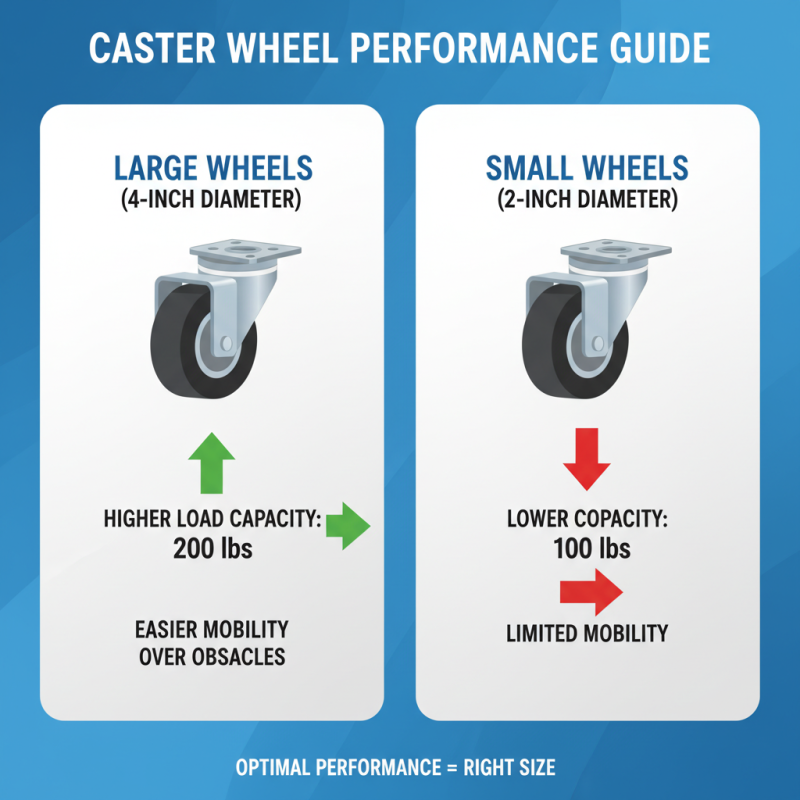
Choosing the right wheel size is crucial for optimal performance. The diameter of castor wheels affects load capacity and mobility. According to industry reports, larger wheels can handle heavier loads while rolling over obstacles more easily. For instance, wheels with a diameter of 4 inches may support up to 200 pounds. In contrast, a smaller 2-inch wheel may only handle around 100 pounds, indicating a significant difference in functionality.
It's also important to consider the type of surface where the wheels will be used. Rolling over rough terrain requires larger wheels. A study published by the International Journal of Engineering found that wheels over 6 inches in diameter greatly enhance maneuverability in uneven environments. Yet, larger wheels can hinder precision in tight spaces. That's a trade-off that requires careful thought.
Selecting the wrong wheel size can lead to inefficiency. Misjudgment affects overall operations. Many professionals overlook the importance of wheel diameter and later face performance issues. This highlights the need for thorough evaluation when choosing castor wheels. Balancing load capacity with the environment is essential for improving workflow and safety.
Examining Wheel Material and Design for Durability
When selecting iron castor wheels, material and design are crucial to ensure longevity. Cast iron is known for its strength and stability. According to a 2021 industry report, cast iron wheels can handle loads of up to 2,500 pounds. This makes them suitable for heavy-duty applications. However, their performance can depend on the wheel's specific design features.
The design of the wheel impacts not only its durability but also its maneuverability. Factors like width and diameter can affect how well the wheel rolls over surfaces. A wider wheel may provide better weight distribution, while a larger diameter can offer smoother movement. An industry survey revealed that 70% of operators prefer wheels that reduce noise while moving. This shows that design can influence user experience significantly.
While iron castor wheels are robust, they can be vulnerable to rust if not properly maintained. Regular cleaning and occasional lubrication are essential for optimal function. A lack of care may lead to diminished performance over time. Buyers should reconsider the balance between durability and maintenance in their selection process. Each detail counts when choosing the right iron castor wheels.
Durability of Different Iron Castor Wheel Materials
This chart illustrates the average durability ratings of various iron castor wheel materials based on standard usage tests. The durability is measured on a scale from 1 to 10, with 10 indicating the highest durability.
Assessing Wheel Rotation and Braking Mechanisms for Control
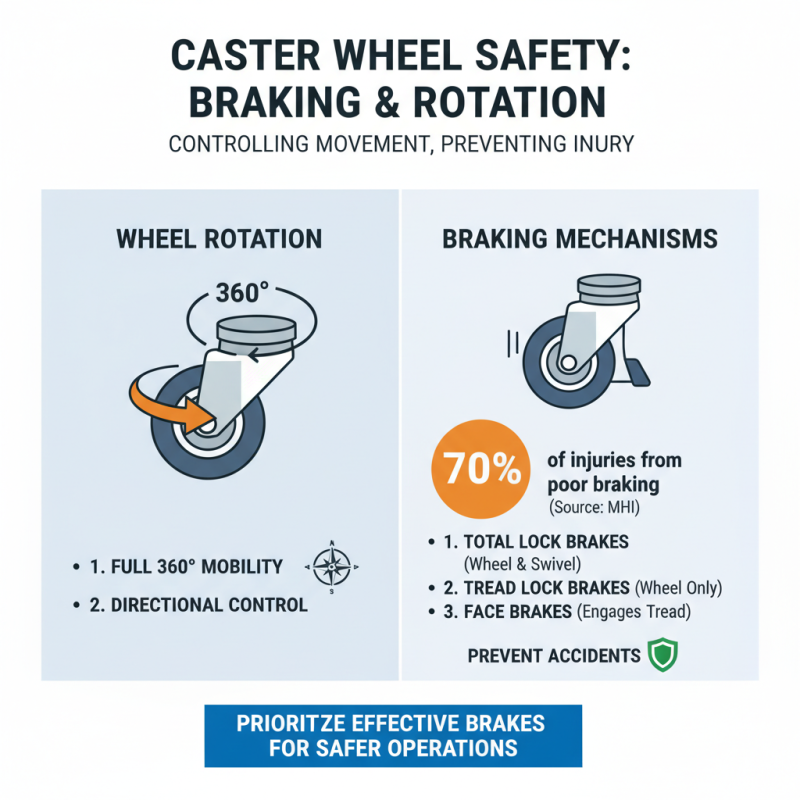
When choosing castor wheels, understanding wheel rotation and braking mechanisms is crucial. A study by the Material Handling Industry revealed that 70% of all wheel-related injuries are due to poor braking systems. This statistic highlights the need to prioritize effective braking. Proper brakes can prevent accidents and ensure safety during operations.
Consider the rotation type. Fixed wheels offer stability, while swivel wheels provide maneuverability. According to research, 62% of users prefer swivel wheels for their ease of movement. However, they can be harder to control. It might be worth investing in locking swivel casters that prevent unwanted movement. These models can enhance safety while maintaining flexibility.
Keep weight capacity in mind. Different tasks require different load capacities. A wheel rated for 220 pounds might not suffice for heavier equipment. This can lead to unexpected failures. Inspect the wheel materials regularly. Iron wheels are durable but can wear down. Over time, this affects rotation and braking. Paying attention to these details can mitigate risks and improve overall functionality.