How to Choose the Best Caster Swivel Wheel for Your Needs?
Choosing the right caster swivel wheel can make a significant difference in your daily tasks. Whether for furniture, carts, or equipment, the choice of a caster swivel wheel affects mobility and ease of use. Many people overlook this important detail, yet it can impact workflows and safety.
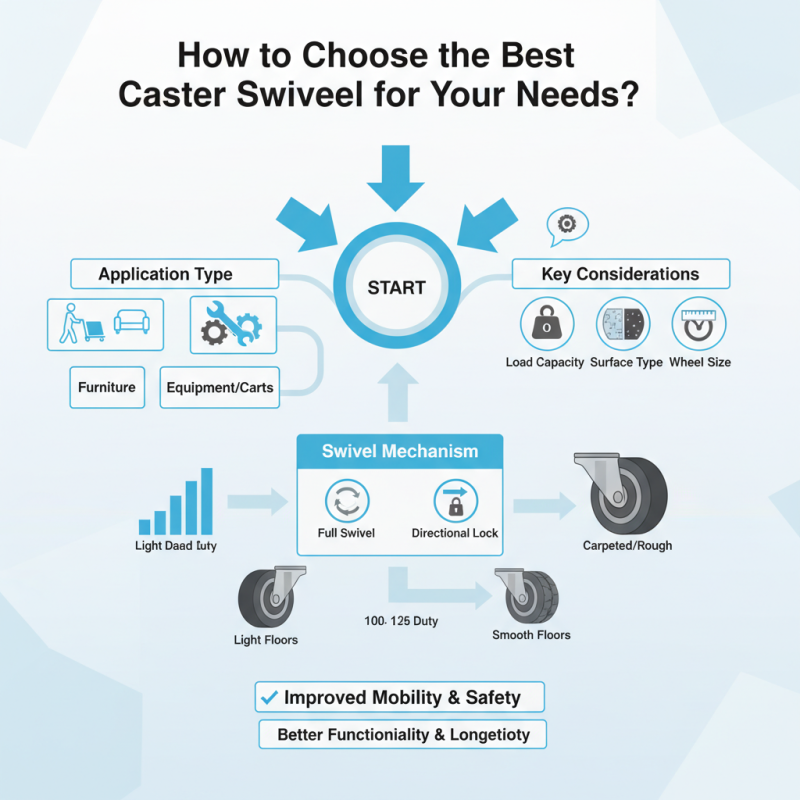
When selecting a caster swivel wheel, consider factors like load capacity, surface type, and wheel size. A wheel meant for smooth floors differs from one for carpeted areas. The wrong choice can lead to frustration and inefficient movement. Additionally, the swivel mechanism should suit your specific needs. It’s essential to reflect on how you plan to use the caster.
Not every caster swivel wheel works for all applications. There might be a tendency to choose based on price rather than quality. This could result in unexpected challenges down the line. Careful consideration of your needs leads to better functionality and longevity. A thoughtful approach makes a difference in your experience.
Understanding Different Types of Caster Swivel Wheels Available
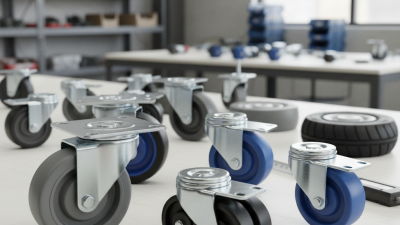
When choosing caster swivel wheels, it’s essential to understand the various types available. The most common types include rubber, nylon, and metal. Each material serves different purposes, affecting durability and noise levels. Rubber wheels are quiet and provide a smoother ride on hard surfaces. In contrast, nylon offers excellent resistance in heavy-duty applications. Metal wheels can handle extreme conditions but may create more noise.
Tips: Consider your floor type. If you have hardwood floors, softer wheels may help prevent scratches. For outdoor use, choose wheels designed to withstand the elements.
Another aspect to consider is the wheel diameter. Larger wheels roll more easily over obstacles and uneven surfaces. However, they may not fit in all spaces. Small wheels are ideal for tight areas but could struggle on rough terrain.
Remember, if you have specific needs, you might feel overwhelmed. It’s okay to ask for help. Consulting with experts can clarify which option might suit you best. Don't rush the decision; it is important to reflect on your daily use.
Types of Caster Swivel Wheels and Their Load Capacities
Key Factors to Consider When Choosing Caster Swivel Wheels
When choosing the best caster swivel wheel, consider several key factors. The wheel material is crucial.
Soft wheels work well on hard surfaces. They absorb shocks better.
Hard wheels, however, are ideal for smooth surfaces. Think about where you will use them most.
Weight capacity matters too. Ensure your chosen caster can handle the load. Overloading can lead to wheel failure.
Take time to calculate the weight of the items you will move. This ensures safety and longevity.
Tips: Measure the height of your setup. The right wheel height will ensure smooth movement.
Don't forget to check the swivel radius. A larger radius allows for better maneuverability but may require more space.
Remember that not every wheel will fit all applications, and some may underperform.
Be willing to adjust your choices based on feedback and usage.
Assessing Load Capacity and Weight Distribution for Caster Wheels
When choosing caster swivel wheels, load capacity is crucial. Each wheel has a specific weight limit.
Exceeding this limit can lead to wheel failure.
Think about the total weight of your items. Consider how that weight is distributed.
An uneven load could cause instability.
A well-distributed load helps prevent accidents.
Next, assess your environment. Hard surfaces require different wheels than soft surfaces.
Casters used on carpets may need to support more weight.
Check the terrain where the wheels will roll.
If you have doubts, consider testing different options. Not every wheel performs well under pressure.
Some are designed for smooth surfaces, while others manage obstacles better.
Reflect on your priorities. Are you focused on mobility or stability?
Sometimes, the perfect wheel may not exist.
Finding a balance can be challenging.
Prioritize your specific needs to avoid costly mistakes.
Choosing the right swivel wheel requires careful consideration of load capacity and weight distribution.
Evaluating Wheel Material and Its Impact on Performance
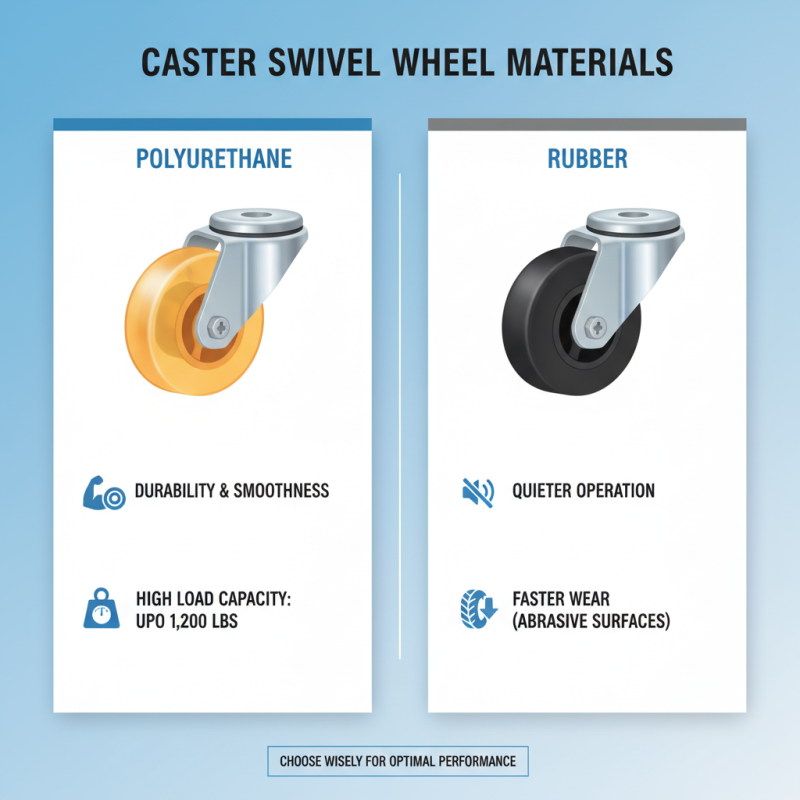
When selecting a caster swivel wheel, wheel material plays a crucial role in performance. Different materials provide distinct advantages and limitations. For instance, polyurethane wheels offer excellent durability and smooth movement on various surfaces. According to industry reports, these wheels can support up to 1,200 pounds. In contrast, rubber wheels are quieter but may wear down faster, especially on abrasive surfaces.
Tip: Always consider the surface where the wheels will be used. Concrete surfaces may require harder materials for longevity, while softer wheels are better for wooden floors.
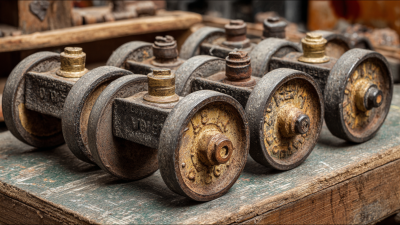
Metal wheels, while extremely durable, can damage sensitive surfaces. They excel in heavy-duty applications but may not be suitable for every environment. This trade-off requires careful evaluation.
Tip: Assess how often the caster will be moved and the weight it must bear. A balance between weight and wheel durability is essential for efficiency. Choosing the right material can enhance productivity but overlooks the potential for noise or surface damage. Consider all factors closely.
Determining Wheel Size and Height for Optimal Maneuverability
Choosing the right caster swivel wheel involves understanding wheel size and height. These factors significantly affect maneuverability. Research indicates that larger wheels typically offer better rolling ease, especially on uneven surfaces. A study by The Caster Wheel Association revealed that wheels 4 inches or larger handle obstacles more efficiently than smaller ones.
Height plays a crucial role too. A wheel's height can influence the center of gravity. Lower wheels may stabilize the load, but they can hinder movement. Conversely, taller wheels improve mobility but risk tipping. A balance must be struck based on the intended application. For instance, a loading dock may benefit from tall wheels, while precision work might require shorter options.
It's essential to consider the specific environment. The industry's average suggests that 80% of users overlook surface conditions when choosing wheel height. A use case may seem perfect until faced with an incline or debris. Reflecting on wheel choice can unveil overlooked variables, leading to future regrets. Ultimately, aligning wheel dimensions with your unique needs enhances operational efficiency and reduces frustration.