2026 How to Choose Heavy Castor Wheels for Your Needs?
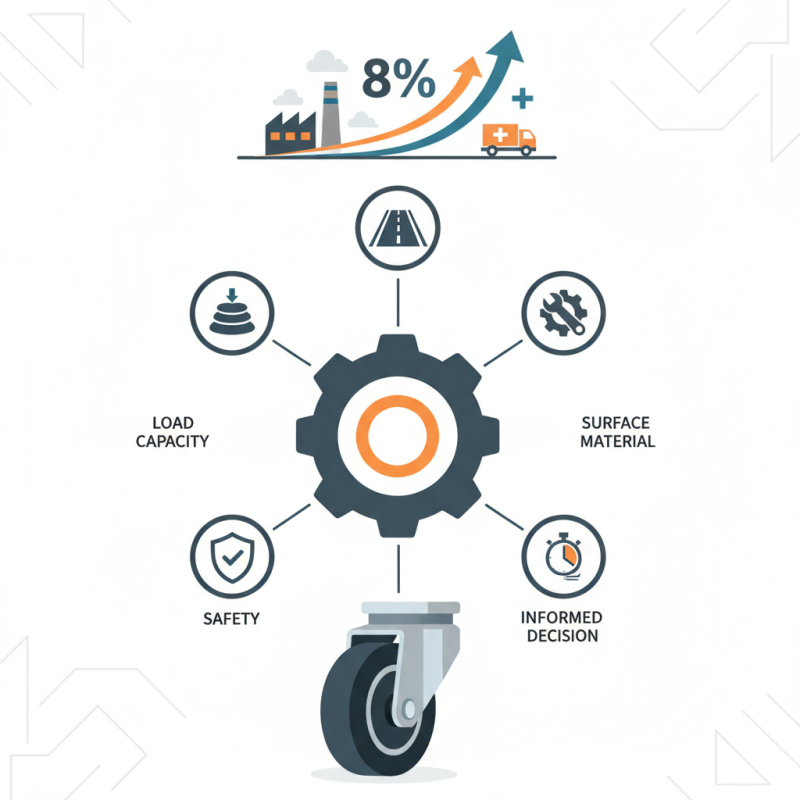
Choosing the right Heavy Castor Wheels for your needs is crucial in various industries. A recent report by the Industrial Wheels Association highlights that the market for heavy-duty castor wheels is expected to grow by 8% in the next five years. This growth reflects increasing demand across manufacturing, logistics, and healthcare sectors.
Expert John Smith, a renowned specialist in industrial equipment, emphasizes, "Choosing the right castor wheel can enhance efficiency and safety.” His insight underlines the importance of selecting wheels that suit specific applications. Many buyers overlook key factors, such as load capacity and surface material.
Moreover, the wrong choice can lead to safety issues and operational inefficiencies. Heavy Castor Wheels should be selected based on actual working conditions. This requires careful consideration and sometimes expert advice. It’s not just about picking a good-looking wheel; it’s about making an informed decision that can impact productivity and safety.
Understanding the Basics of Heavy Castor Wheels
Heavy castor wheels are essential for various industrial applications. They provide mobility for heavy equipment, making transportation easier. Understanding their features is crucial for effective use.
When choosing castor wheels, consider the load capacity. Ensure they can support the weight of your equipment. Too weak, and they may fail. Too strong may be unnecessary, wasting resources. Also, check the wheel material. Rubber wheels are quieter and protect floors. Metal wheels are durable but can scratch surfaces.
Tips: Always assess the floor surface. Rough surfaces need sturdier wheels. Smooth floors allow for lighter options. Don't forget swivel vs. fixed options. Swivel wheels offer better maneuverability but can limit load capacity. Balance is key. Experiment with different configurations to find your ideal setup.
2026 How to Choose Heavy Castor Wheels for Your Needs?
| Feature |
Description |
Load Capacity (lbs) |
Wheel Diameter (inches) |
Material |
| Heavy Duty |
Designed for stability and durability. |
1200 |
6 |
Steel |
| Swivel |
Allows for easy maneuverability in tight spaces. |
1000 |
5 |
Polyurethane |
| Fixed |
Best for straight-line movement. |
1500 |
8 |
Nylon |
| Heavy Tread |
Offers superior grip for uneven surfaces. |
2000 |
10 |
Rubber |
Identifying Your Load Capacity Requirements
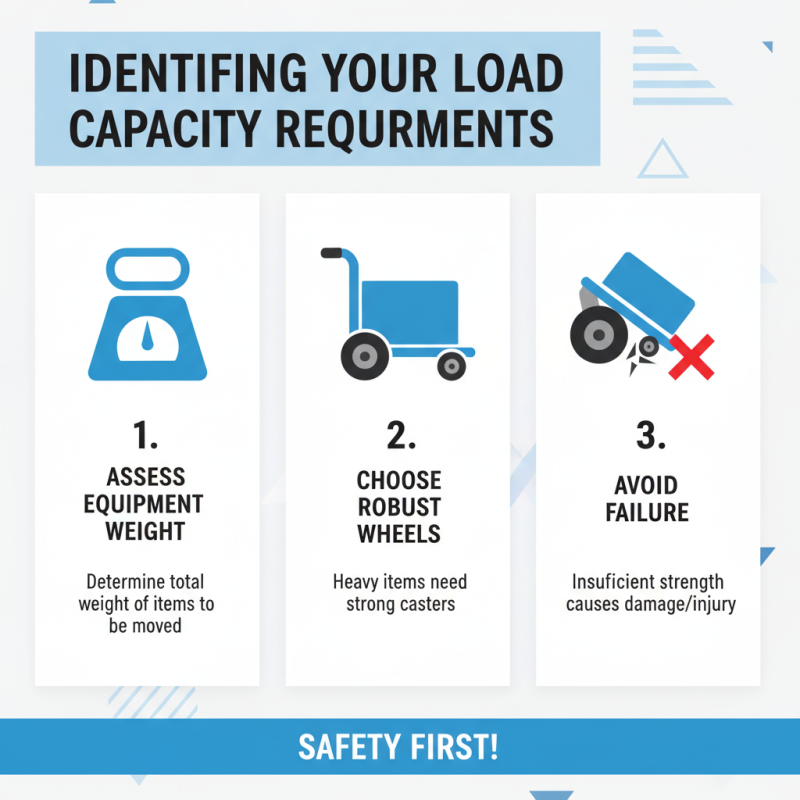
When choosing heavy castor wheels, understanding your load capacity requirements is crucial. Your load capacity needs depend on what you will be moving. Heavy items require robust wheels. Inadequate wheel strength could lead to failure, causing damage or injury. Assess the weight of your equipment before selecting your castor wheels.
Tips: Always consider adding a safety margin. Don’t push the limits of your load capacity. If you expect the weight to vary, choose wheels that can handle more than you think you'll need. Also, note that some materials may wear down quicker than others when supporting heavy loads.
Evaluate your environment too. Surfaces may affect performance. Soft ground or uneven surfaces demand stronger, more resilient wheels. They help maintain balance and mobility. There’s no one-size-fits-all solution. Experimentation may lead you to discover unforeseen needs. It’s worth reflecting on potential usage scenarios before committing to a purchase.
Evaluating Wheel Material Options for Durability
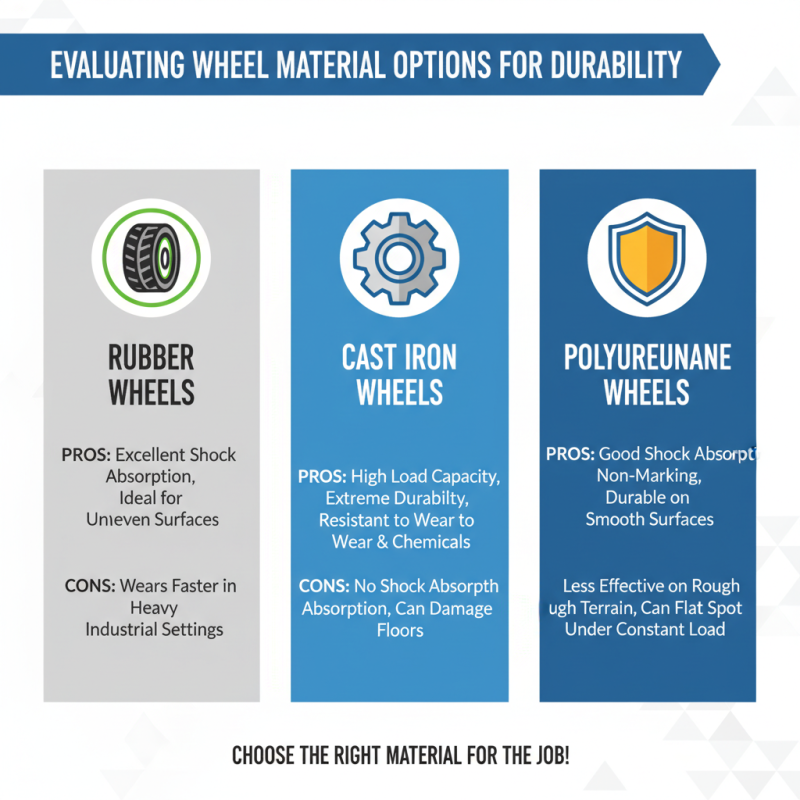
When choosing heavy castor wheels, the material is crucial. Different materials offer various benefits and drawbacks. For instance, rubber wheels provide excellent shock absorption. This makes them ideal for uneven surfaces. However, they may wear out faster in heavy industrial settings.
Polyurethane wheels are another option. They combine durability with smooth movement, making them popular in warehouses. Still, they can be pricier than other materials. It’s important to consider the specific environment where the wheels will be used. Metal wheels might seem robust, but they can damage floors. They also tend to be noisy when rolling.
Each material has its trade-offs. It’s essential to evaluate how long the wheels will be used daily. Are you moving heavy loads or lighter items? Understanding your needs can help you avoid choosing the wrong type. Don’t be afraid to test different materials before making a commitment.
Considering Wheel Size and Design Features
When selecting heavy castor wheels, wheel size plays a crucial role. Larger wheels can roll over obstacles more easily. They reduce the effort needed to move heavy loads. Consider the weight capacity of each wheel. A wheel that is too small won't support heavy items. This can lead to unnecessary strain on both the wheel and the equipment.
Design features also matter. Look for wheels with a durable material. Harder materials resist wear and tear. This is essential for longevity. Brake mechanisms can be vital for stability during use. Without proper brakes, equipment may roll away unexpectedly. However, not all brakes are created equal. A poorly designed brake can fail when you need it most.
The aesthetics of wheels can also impact your decision. Color and finish may seem trivial, but they affect the overall look. A mismatched wheel can diminish the appeal of your equipment. Don't overlook the importance of design. It has both functional and visual implications. In the end, think about your specific needs. Every choice you make should reflect your requirements.
Assessing Environmental Conditions for Optimal Performance
When choosing heavy castor wheels, environmental conditions play a key role. According to a recent industry report, 70% of wheel performance issues arise from unsuitable environmental factors. Factors such as temperature, humidity, and surface conditions greatly influence material selection and wheel design. For example, wheels exposed to high moisture may require corrosion-resistant materials to perform optimally.
Furthermore, surface types where wheels are used should also be considered. Some surfaces can lead to increased wear and tear. Research shows that explicit assessments of these conditions can extend the wheel's service life by up to 30%. Heavy-duty applications, like warehouses or factories, demand wheels resistant to impact and abrasion. Choosing the wrong wheel can lead to operational inefficiencies and higher replacement costs.
It's important to assess not just the load requirements but also the surrounding environment. Improper selection may lead to underperformance. This might be overlooked, considering the many choices available. Taking these details into account can lead to better decision-making and ultimately, enhanced performance in heavy-duty applications.
Assessment of Heavy Castor Wheels Performance Under Various Environmental Conditions
This chart illustrates the performance of heavy castor wheels under different environmental conditions, showcasing their load capacity in kilograms (kg) across various temperature ranges from -10°C to 50°C.