Top 10 Caster Swivel Types for Global Buyers to Consider?
In the competitive world of industrial supply, "Caster Swivel" options are crucial for operational efficiency. According to a recent report from Market Research Future, the global caster market is expected to reach USD 4.5 billion by 2025. This growth reflects increasing demand across various sectors, emphasizing the significance of selecting the right swivel types.
Expert Jennifer Stokes, a leading authority in material handling solutions, notes, “Choosing the correct caster swivel can drastically enhance workflow and reduce strain on equipment.” Her perspective highlights the importance of informed decision-making. Buyers must consider load capacity, wheel material, and environmental factors when selecting.
Research indicates that not all casters are created equal. Variability in quality and functionality can affect performance and safety. Understanding these differences helps avoid costly mistakes. As the market evolves, global buyers need to stay informed. This knowledge will ensure they are making the best possible choices in selecting caster swivel types.
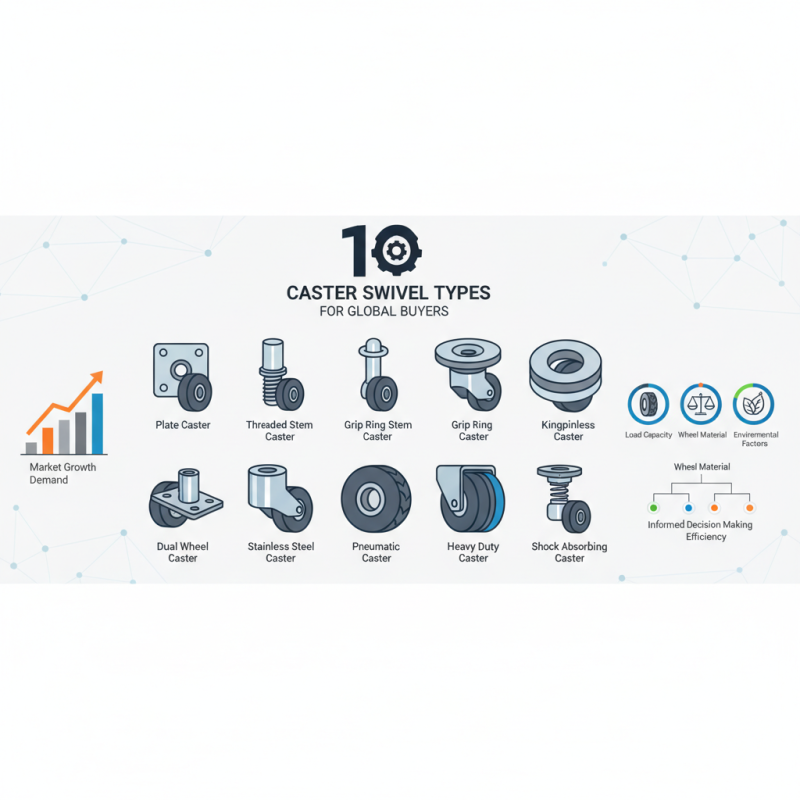
Types of Caster Swivels: An Overview for Global Buyers
Caster swivels play a crucial role in various applications, providing mobility and flexibility. This overview will help global buyers understand different types of caster swivels available in the market. Each type has unique features that cater to specific needs and environments.
Standard swivel casters are the most common. They allow smooth movement in any direction. The heavy-duty variant supports more weight. These may be crucial for industrial use, where equipment requires mobility and stability. However, buyers should consider the surface conditions where these casters will be used. Not all wheels perform well on uneven surfaces.
The brake swivel caster is another important option. It provides additional control by locking the wheel in place. This is essential in situations where stability is paramount. Yet, users should reflect on how often brakes will be engaged. Misuse can lead to premature wear. Lastly, furniture casters offer a different approach, focusing on aesthetics and floor protection. They might not handle heavy loads but are perfect for lightweight furniture. Understanding these nuances will guide buyers toward the right choice.
Top 10 Caster Swivel Types for Global Buyers to Consider
| Caster Type |
Wheel Material |
Load Capacity |
Swivel Radius |
Application |
| Polyurethane Caster |
Polyurethane |
500 lbs |
3.5 in |
Warehouse use |
| Steel Caster |
Steel |
1000 lbs |
4 in |
Heavy machinery |
| Nylon Caster |
Nylon |
300 lbs |
5 in |
Food industry |
| Rubber Caster |
Rubber |
600 lbs |
4 in |
Retail use |
| Aluminum Caster |
Aluminum |
800 lbs |
3 in |
Healthcare |
| Cast Iron Caster |
Cast Iron |
1200 lbs |
6 in |
Construction |
| TPR Caster |
Thermoplastic Rubber |
500 lbs |
4 in |
Industrial equipment |
| Phenolic Caster |
Phenolic |
600 lbs |
3.5 in |
Heavy duty |
| Electrostatic Caster |
Multi-material |
700 lbs |
5 in |
Electronics |
| High-Temperature Caster |
Heat-resistant material |
500 lbs |
4 in |
Ovens |
Key Features to Consider When Choosing Caster Swivel Types
When selecting caster swivel types, several key features should come into play. First, consider the wheel material. Harder wheels work well on smooth surfaces, while softer wheels are better for uneven terrain. This choice impacts mobility and noise levels. Additionally, look for wheels with brakes for added safety. They can prevent unwanted movement in busy spaces.
Next, pay attention to the swivel mechanism. A dual-ball bearing design often offers smoother turning and easier maneuvering. Moreover, the load capacity of each caster is essential. Assess whether the casters can handle the weight of your equipment or furniture. Insufficient capacity can lead to wear or failure over time.
Durability also deserves focus. Look for casters made from robust materials to resist wear and damage. Cheaper models might save money now but could require frequent replacement. Lastly, consider ease of installation. Features like plate versus stem mounts can affect how simply the casters attach to your items. Reflecting on these factors can help you make informed choices for your specific needs.
Top 10 Caster Swivel Types: Key Features Comparison
Comparison of Material Durability in Different Caster Swivel Types
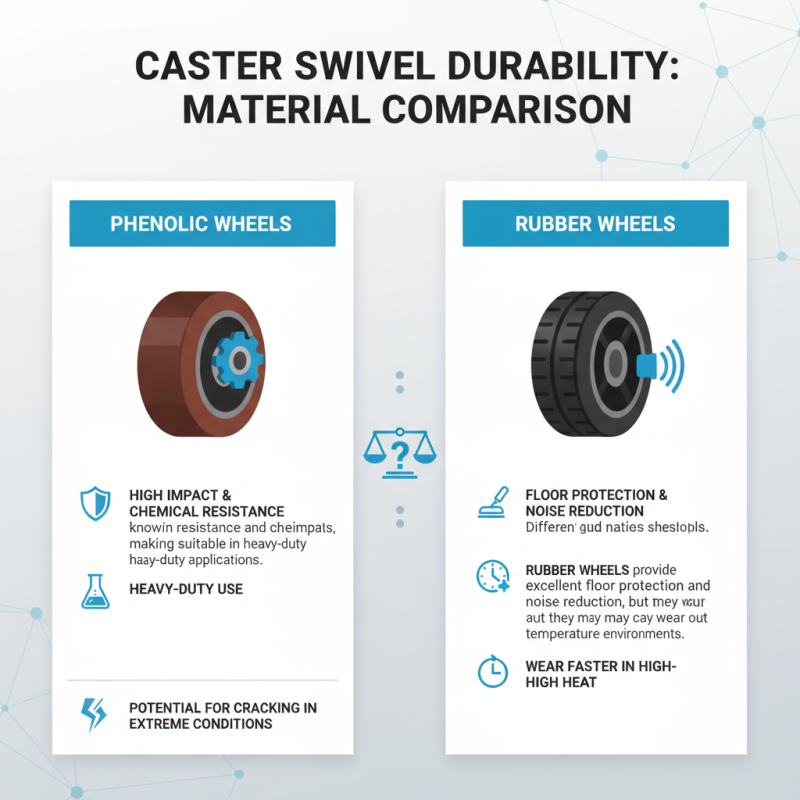
When evaluating caster swivel types, material durability plays a crucial role. Different materials offer various strengths and weaknesses. For instance, phenolic wheels are known for their resistance to impact and chemicals, making them suitable for heavy-duty applications. However, they can crack under extreme conditions. On the other hand, rubber wheels provide excellent floor protection and noise reduction, but they may wear out faster in high-temperature environments.
Metal casters, such as those made from steel or aluminum, are extremely durable and capable of bearing substantial loads. However, they might rust or corrode if not properly treated. This poses challenges for buyers, as they must weigh the importance of durability against the specific environment where the casters will be used. It is not uncommon for businesses to invest in sturdy, metal options, only to find them unsuitable for wet or corrosive environments.
Awareness of these material properties can guide buyers in making informed decisions. Observing how materials behave in real-life scenarios reveals vital insights. Buyers should consider the specific needs of their operations and the potential limitations of each option. Engaging in practical tests can also uncover unexpected results. Understanding these factors ensures that the chosen swivel type aligns with durability requirements and operational demands.
Assessing Load Capacity and Performance of Caster Swivels
Selecting the right caster swivel is critical for efficiency. Assessing load capacity and performance involves several factors. First, it's essential to understand the weight limit of different swivels. Not every caster is designed to support the same weight. Overloading can lead to failures, which pose safety risks.
When evaluating performance, consider the wheel material. Rubber wheels provide superior traction on various surfaces. They also minimize noise, making them suitable for quieter environments. On the other hand, metal wheels excel in durability but may scratch floors.
Tips: Choose wheels that match your flooring type. This will enhance mobility and protect surfaces. Evaluate the swivel mechanism too. A high-quality swivel will turn smoothly, reducing wear over time. Remember, improper selection can result in wasted resources and increased maintenance. Always consult specifications before making a purchase to ensure optimal functionality.
Market Trends and Innovations in Caster Swivel Designs
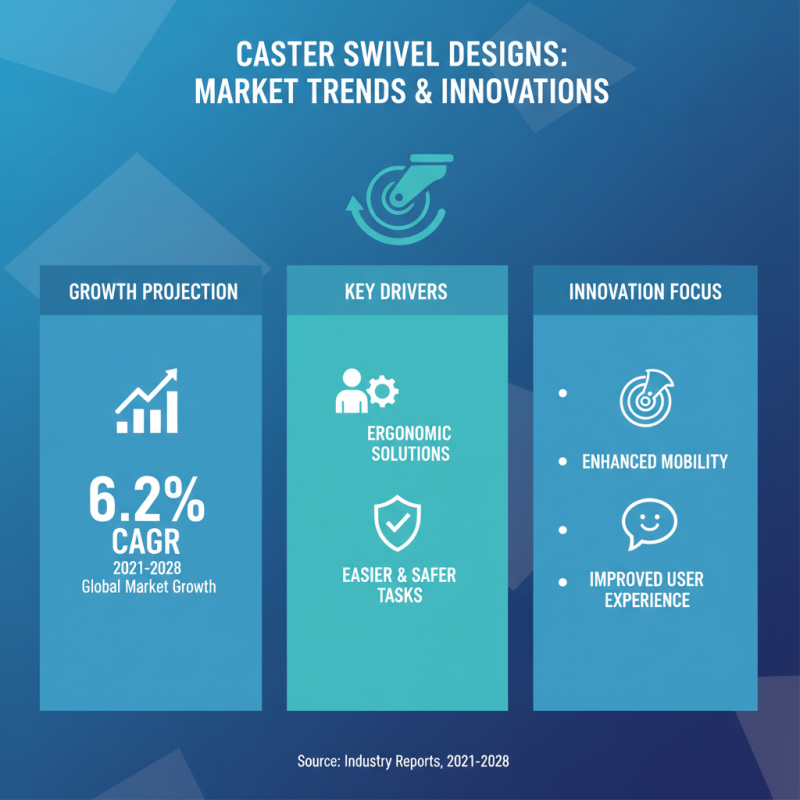
The caster swivel market has seen notable advancements in design and functionality. Manufacturers are increasingly focusing on innovations that enhance mobility and user experience. According to industry reports, the global caster market is projected to grow at a CAGR of 6.2% from 2021 to 2028. This growth is driven by the demand for ergonomic solutions that make tasks easier and safer.
Recent trends indicate a shift towards lightweight materials and advanced wheel technology. This includes the use of thermoplastic elastomers, which offer durability and resistance to wear. Furthermore, customizable features have become more prevalent. These enable users to select casters that best fit their specific needs, enhancing overall efficiency.
However, some challenges exist in the design process. Ensuring that casters maintain stability while providing flexibility can be difficult. Users often seek a balance between load capacity and maneuverability. Additionally, sustainability concerns push manufacturers to consider eco-friendly materials. Addressing these complexities is vital for staying competitive in this evolving market.