Why Choose Furniture Castor Wheels for Global Buyers?
Global furniture purchasing is becoming more performance-driven. Buyers now evaluate mobility, floor protection, noise, maintenance, and lifecycle cost—not only appearance. Grand View Research estimated the global furniture market at approximately USD 516.6 billion in 2022, with continued growth expected through 2030. That scale creates pressure for safer and more adaptable furniture components.
Furniture Castor Wheels support this shift by helping tables, cabinets, hospital units, office chairs, and display fixtures move smoothly. A well-selected castor can reduce lifting, simplify room changes, and protect expensive flooring. Small details matter. A 75 mm wheel may roll quietly across vinyl, while a hard wheel can mark polished wood. A total-lock brake can hold a mobile cabinet firmly beside a workstation. These differences are easy to overlook.
Industry guidance also supports careful specification. European castor standards, including EN 12527 and EN 12528, address testing and performance considerations for industrial castors. BIFMA standards provide useful reference points for commercial furniture durability and safety. However, standards do not replace practical testing. A wheel tested in a laboratory may behave differently on carpet, uneven thresholds, or dusty warehouse floors.
That is where global sourcing becomes more complex. Buyers must compare load ratings, mounting methods, swivel resistance, brake design, materials, corrosion resistance, and replacement availability. Reports from Grand View Research and Fortune Business Insights show expanding demand across furniture and mobility-related component markets, but market data cannot describe every real hallway. Field trials remain valuable. Sometimes, the cheapest wheel becomes the most expensive choice.

What Are Furniture Castor Wheels?
Why Choose Furniture Castor Wheels for Global Buyers?
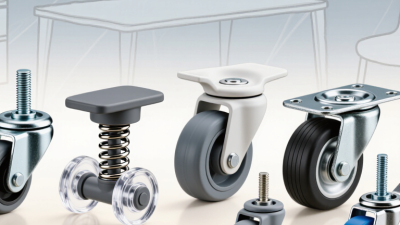
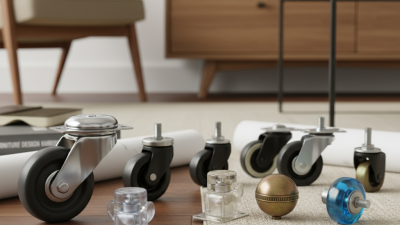
Furniture castor wheels are small rolling components fitted beneath chairs, cabinets, tables, and mobile storage units. They combine a wheel, mounting plate or stem, bearing, and sometimes a brake. Their main purpose is simple: support furniture while allowing controlled movement across a floor.
They are small. That detail matters.
A suitable castor reduces lifting, dragging, and floor contact. Swivel models turn smoothly in tight spaces, while fixed models move in a straight line. Locking versions can hold furniture in place during use.
Wheel materials also affect performance. Polyurethane usually offers quieter movement on hard floors, while rubber can provide better grip. Hard nylon may handle heavier loads, but it can feel noisy on tile.
In practical selection work, buyers should check load capacity, wheel diameter, mounting size, and floor type together. A large wheel often crosses door thresholds more easily. A soft tread may protect finished flooring, but it can wear faster under heavy furniture. I once focused too much on rated capacity and overlooked the mounting stem. The wheels fit the load, but not the furniture frame. That mistake was avoidable.
Reliable suppliers should provide dimensional drawings, material details, load test information, and installation guidance. Buyers can also inspect wheel rotation, brake engagement, and fastener strength before full production. Environmental conditions deserve attention too. Humidity, dust, temperature changes, and frequent movement can influence service life. No castor suits every furniture design.
Which Castor Wheel Types Suit Different Furniture?
Why Choose Furniture Castor Wheels for Global Buyers?
Choosing castors by furniture type prevents noise, floor marks, and unstable movement. Grand View Research’s 2024 office furniture report estimates the global market exceeded US$54 billion in 2023. This scale increases demand for adaptable, tested mobility components. However, market growth does not replace proper load testing.
Swivel twin-wheel castors suit office chairs, small tables, and display units. They turn easily in narrow spaces. Soft polyurethane or rubber treads work better on wood, vinyl, and tile. Hard nylon wheels usually move more efficiently across low-pile carpet.
Locking castors fit mobile workstations and hospital-style furniture, where movement must stop quickly. Rigid castors suit cabinets that travel along straight paths. Heavy-duty steel castors support storage furniture, but they may damage delicate floors.
ISO 22881 provides guidance for furniture castor performance and testing. Buyers should still check actual test conditions.
Tips: Divide the loaded furniture weight by the number of castors, then add a safety margin. Uneven floors can shift weight onto one wheel. A five-wheel base may not carry five equal shares. I would test a sample on the target floor before placing a large order. Verify wheel diameter, mounting plate size, brake access, and temperature resistance. Reports offer direction, not certainty.
What Should Global Buyers Consider Before Purchasing?
Before purchasing furniture castor wheels, global buyers should match performance with the actual furniture environment. Grand View Research estimates the global caster wheels market will expand steadily through 2030, driven by mobility needs in commercial and residential furniture. However, market growth does not remove selection risks. A wheel designed for smooth factory floors may perform poorly on textured tiles, carpet, or uneven thresholds.
Check the load rating carefully. Divide the total furniture weight by three, not four, because floors are rarely perfectly level. Add a safety margin for movement and accidental impact. Small details matter. Confirm wheel diameter, mounting plate size, swivel clearance, brake access, and noise requirements. Thermoplastic rubber can protect floors, while harder materials may roll more easily but leave marks. ISO 22883 provides testing guidance for castors and wheels, yet laboratory results cannot fully represent every customer’s floor condition.
Global buyers should also examine corrosion resistance, packaging strength, spare-part availability, and installation instructions. A 2024 logistics performance analysis from the World Bank highlights the importance of shipment reliability and supply-chain visibility, especially for international procurement. Ask for test reports, material specifications, and batch consistency before placing a large order. A higher load rating is not automatically better; oversized wheels can increase furniture height and create stability problems. Price remains important, but comparing only unit cost is a weak method. Replacement frequency, freight damage, and labor often change the real purchasing result. Teams sometimes overlook that point.
How Do Quality, Safety, and Compliance Affect Selection?
Why Choose Furniture Castor Wheels for Global Buyers?
Global furniture buyers often choose castor wheels for quiet movement, flexible layouts, and easier handling. Yet price alone can hide serious weaknesses. During product checks, I examine load ratings, wheel diameter, tread material, and mounting strength. A chair may roll smoothly in a showroom but fail on uneven flooring. Small details matter.
Quality begins with consistent materials and controlled production. Metal brackets should resist bending, while sealed bearings reduce dust-related friction. A properly matched swivel plate keeps movement stable under changing loads. Buyers should request test reports, sample inspections, and clear tolerance data. These documents do not replace experience. They make supplier claims easier to verify. I have seen attractive samples perform poorly after repeated impact testing, so one successful demonstration proves little.
Safety and compliance require more than a familiar certificate. Castors must suit the furniture’s use, floor type, load pattern, and destination market rules. Check braking performance, edge protection, chemical restrictions, labeling, and batch traceability. For healthcare or workplace furniture, accidental movement can create real hazards. Compliance documents may vary by country. Confirm their scope and validity before shipment. No checklist is perfect, and field feedback may reveal problems that laboratory testing misses. An overlooked floor condition can still change the result.